
ENG | ESP
AT HOME IN THE WOODS
A revisited New England farm house, focused on low embodied carbon, and passive strategies in rural Western Massachusetts.
Project Type //
Single-family home, New Built
Chronology//
2021-2022
Location //
Massachussets, USA
Team/Stakeholders //
Nerea Amoros Elorduy – Lead Architect
Client//
Private
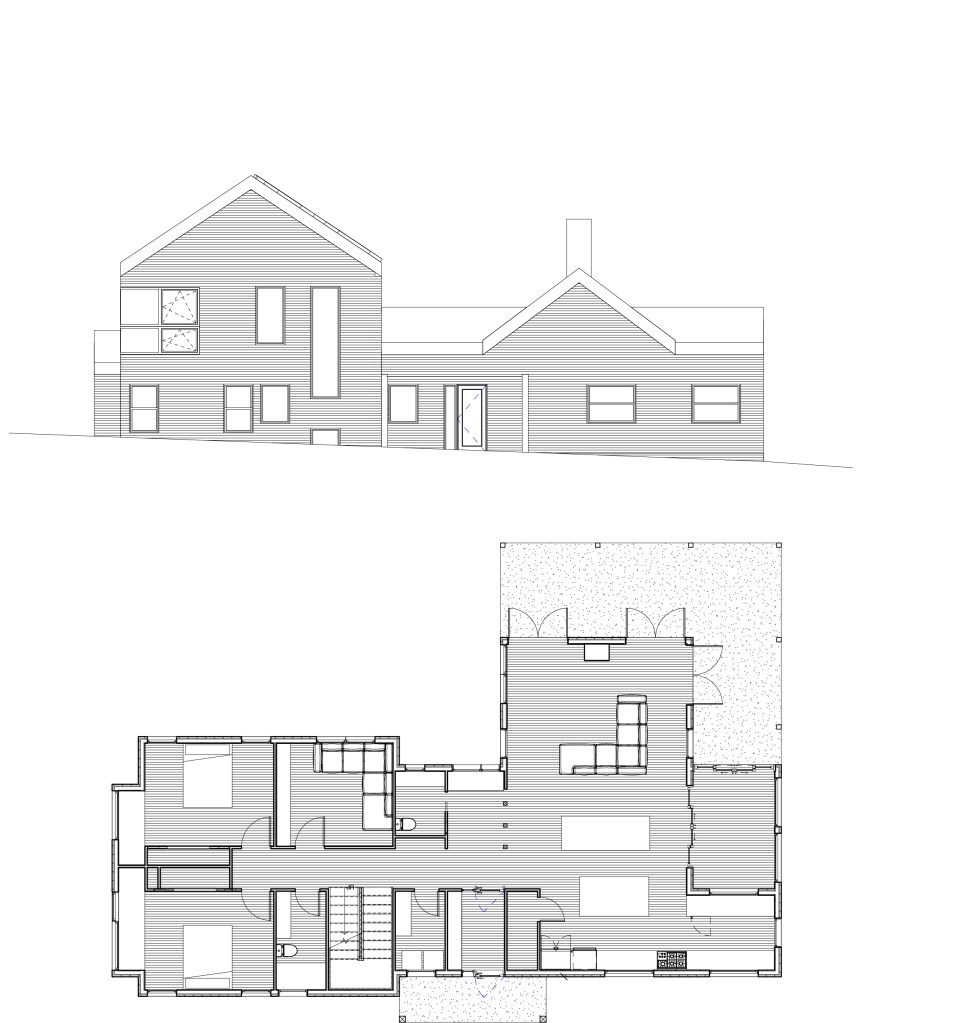
A low-embodied carbon, sustainable home in Western Massachusetts, designed for a single family amidst the woods. It takes inspiration from the farmhouses in the area and uses as much wood as possible from the tree clearing of the acreage to construct the home, including its structure, floors, and other features.
The design and orientation of the house take full advantage of the surrounding environment and its stunning views. Built on a small promontory to the west of a small field, the home’s spaces can enjoy both the beauty of the field and the surrounding forest. The house is protected by woods on its back and sides, and it benefits from the cool air that climbs from a nearby creek in front of it, which separates it from the field.
The public areas of the house, namely the kitchen, dining, and living rooms, boast high gable ceilings that give the space a feeling of openness. The breakfast nook leads out to a wraparound porch with breathtaking views, and the French doors and removable screen panels allow the family to convert the porch into a screened-in space or open up the living area to the surrounding environment, providing the space with flexibility and adaptability to suit the changing seasons.
The bedrooms, situated to the north of the entrance, have lower ceilings to maximize the energy-efficient cooling and heating system. The master suite, which is the only upstairs space, enjoys incredible views and features a Japanese soaking tub in a corner window in the master bedroom with views of the woods. Due to its location on a promontory over a ledge, and to take advantage of the need for tall foundations, a guest apartment is located below the ground floor under the bedrooms, which can be accessed through the lower ground outdoors and is equipped with its own kitchenette and bathroom. The roofs are oriented to gain the most heat and for the efficient location of solar panels. The vertical siding of the exterior gives the construction a modern take on the traditional style of the area. The house’s openings and opaque walls, the plan distribution, and the arrangement of spaces are designed following passive design principles as much as possible.
 CREATIVE ASSEMBLAGES