
ENG | ESP
SOUTHERN ECOSYSTEMS
The “Hunguta Collective” created a living atlas of existing spatial interventions led by regional actors to challenge the understanding of degrowth in the spatial practices in sub-Saharan Africa.


Project Type //
Research and Exhibition (With Hunguta Collective)
Chronology//
2019
Location //
Oslo, Norway
Team//
Hunguta Collective:
Nerea Amoros Elorduy
Tomà Berlanda
Khensani de Klerk
Tao Klitzner
Scott Lloyd
Maxwell Mutanda
Sunniva Viking
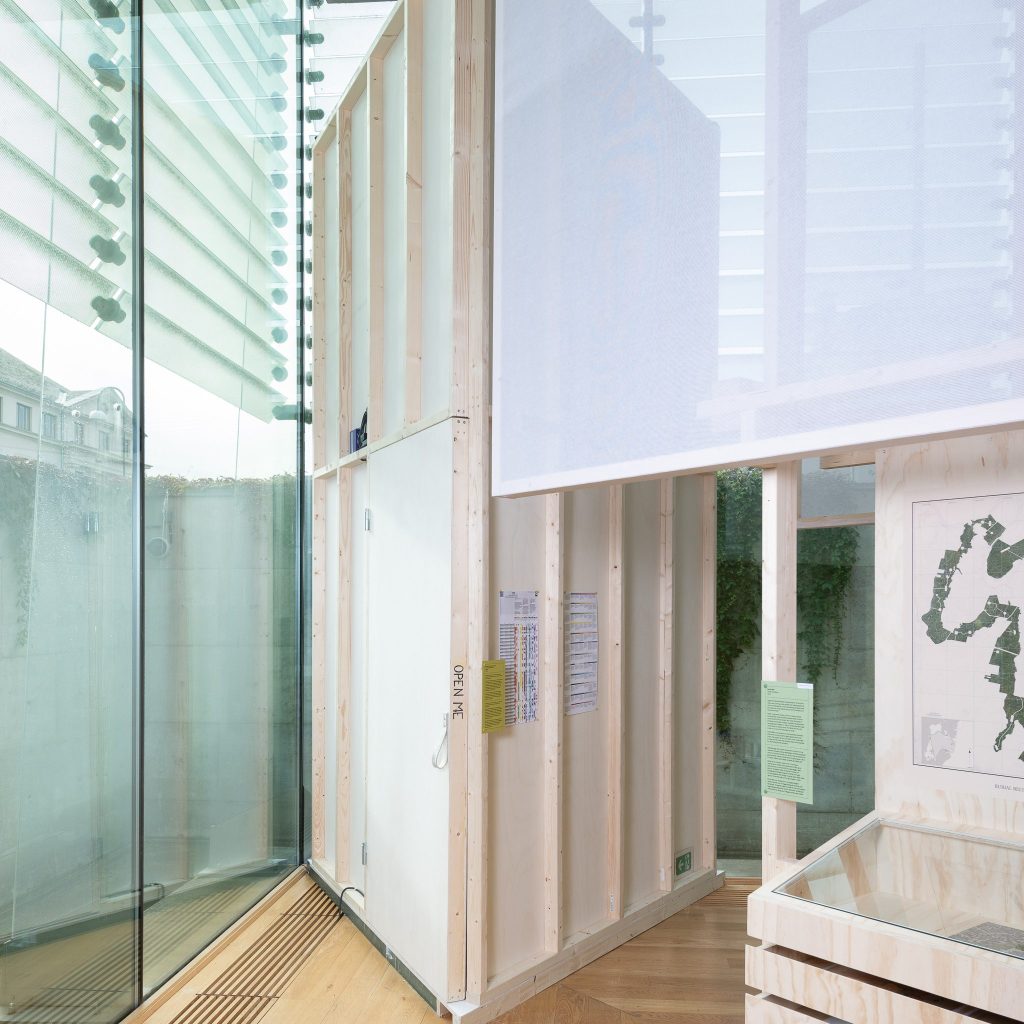
In 2019, the “Hunguta Collective” designed an installation called Disruptive (De)growth Southern Ecosystems for the Oslo Architecture Triennale. The group consisted of architects, researchers, and artists such as Tomà Berlanda, Khensani de Klerk, Tao Klitzner, Scott Lloyd, Maxwell Mutanda, and Sunniva Viking, as well as Creative Assemblages founder Nerea Amorós Elorduy. The exhibition was curated by Interrobang and was held at the National Museum of Art in Oslo, Norway.
The collective aimed to question the understanding and embodiment of the concept of degrowth in the spatial practices of ecosystems in sub-Saharan Africa. The installation was designed as an unconventional spatial experience that allowed for multiple readings and offered the audience dynamic and interactive access to a collection of novel case studies.
The research that fed into the exhibition intended to challenge the divisive colonial reading of sub-Saharan Africa’s built environment landscape. The project built and presented a living atlas of existing spatial interventions led by regional actors. Presented as an immersive kaleidoscope and an interactive website, the project can serve as a learning tool that subverts established modes of conceiving degrowth as an easily transported, translated, and imposed paradigm.
In 2019, the “Hunguta Collective” aimed to challenge the understanding of degrowth in the spatial practices in sub-Saharan Africa by presenting a living atlas of existing spatial interventions led by regional actors. The project was presented as an immersive kaleidoscope and an interactive website, serving as a learning tool to subvert established modes of conceiving degrowth as an easily transported, translated, and imposed paradigm.
 CREATIVE ASSEMBLAGES