ENG | ESP
HOME-BASED EARLY CHILDHOOD INITIATIVES
This research project aimed to improve home-based early childhood development initiatives in Kigeme and Mugombwa refugee camps. It involved identifying and mapping all the initiatives, selecting some as case studies, and developing incremental proposals using upcycled materials found in and around the camps.
Project Type //
Research findings dissemination and impact phases
Chronology//
2017
Location //
Kigali, Kiziba, Kigeme and Mugombwa refugee camps, Rwanda
Team//
Nerea Amoros Elorduy – Lead Architect
Fellows from African Design centre:
Victor Iyakaremye
Lydia Kanakulya
Moses Mawa
Refugee parents, caregivers and children from Kiziba and Kigeme
Funding//
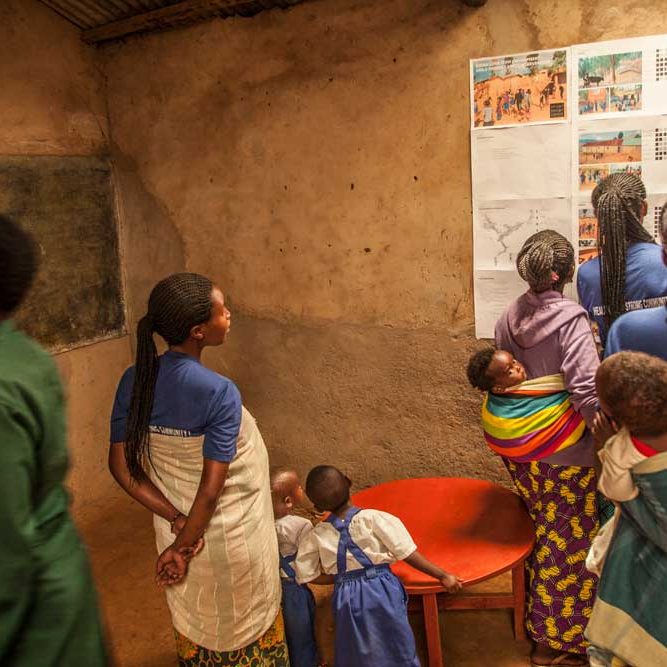
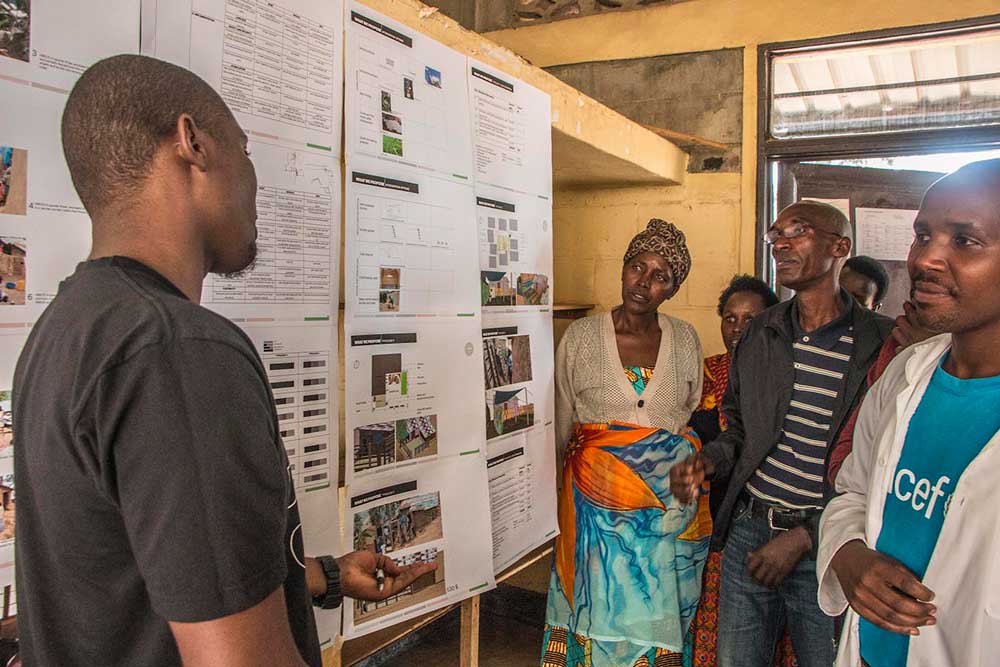
In the fall semester of 2017, the Creative Assemblages’ founder coordinated a research rotation at the African Design Centre (ADC). This participatory research had three main goals. Firstly, to provide refugee and camp administration participants in the three-year-long research project “Mapping refugee spaces” with an opportunity to comment on the research results. Secondly, to teach recent architecture graduates from the region participatory design and research processes concerning young children’s learning matters. Lastly, to improve the spaces used for home-based ECD initiatives in both Kigeme and Mugombwa refugee camps, fostering creativity and innovation among students and research participants.
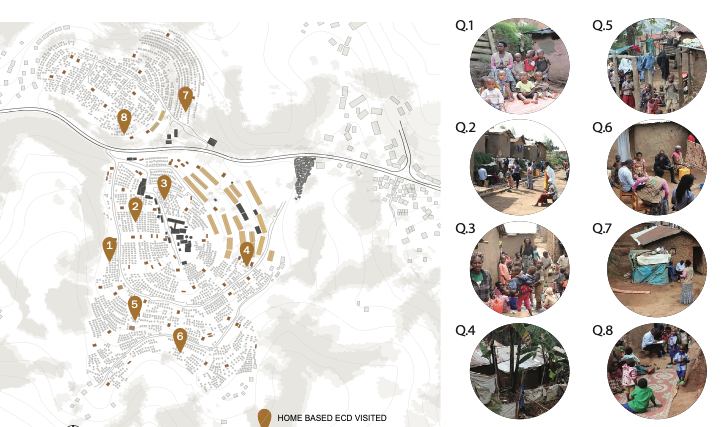
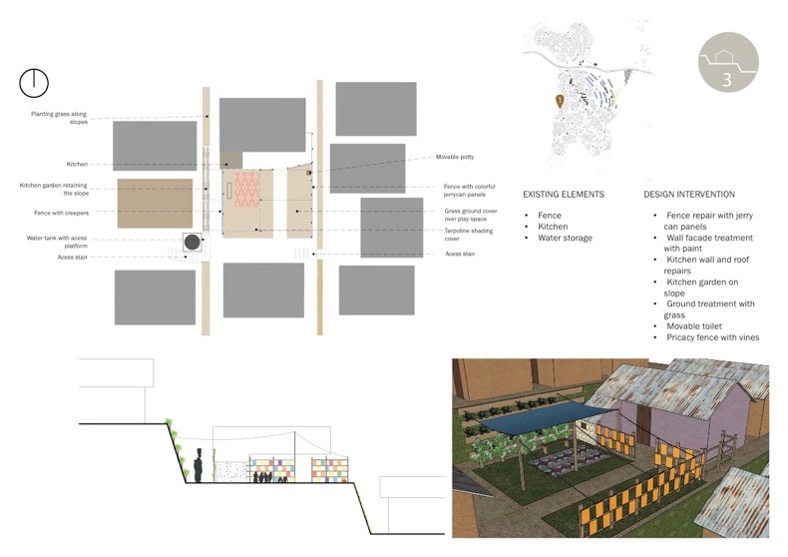
The process involved identifying and mapping all the home-based ECD initiatives in both camps. Some of those the team of refugees and architect graduates selected as case studies, and we visited them to talk with the actors involved and spatially analyze the environments used for the home-based ECD initiatives. Based on that, we developed a series of three workshops to, together with children, parents, and other adults involved in ECD in the camps, design incremental ways of improving the spaces to make them safer, more stimulating, and more comfortable.
The outcome was a series of incremental proposals that upcycled materials found in and around the camps. These proposals could be applied to the various home-based ECD environments existing, with over 150 in total between the two camps.
 CREATIVE ASSEMBLAGES