
ENG | ESP
IMIGONGO MURALS
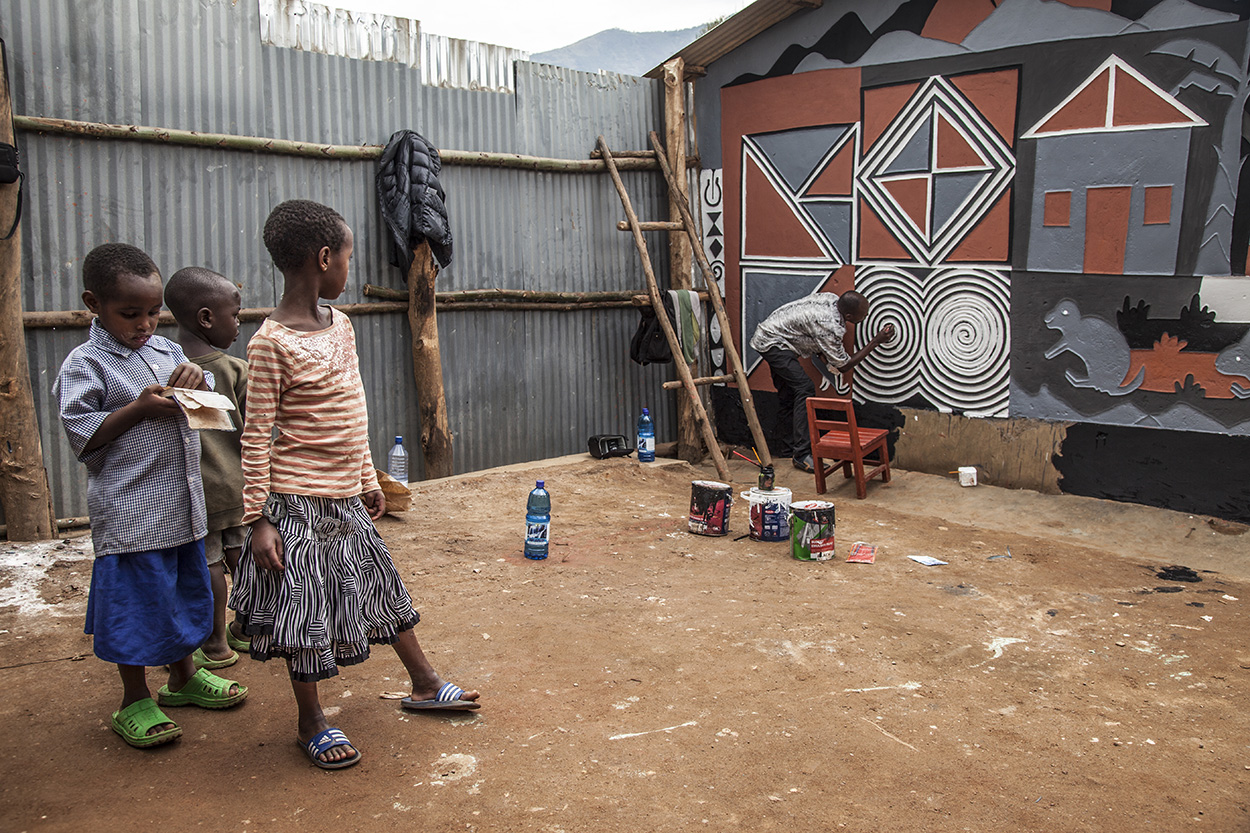
Imigongo murals used in the Congolese refugee camps to make areas where children play more friendly and easily identified.



Project Type //
Research findings dissemination and impact phases
Chronology//
2017
Location //
Kiziba refugee camp, Rwanda
Team//
PI – Nerea Amoros Elorduy
Lloyd Price – 3D Artist
Joan Amoros Elorduy – Photographer
RA – Moses Mawa
RA – Victor Iyakaremye
RA – Lydia Kanakulya
Groups of refugee parents, ECD caregivers, Youth Arts Centre’s members
Imigongo Cooperative members from Rwanda’s Eatsern province
Funding//
Fundació La Caixa
This project was the tail end of a three-year-long research about the influence of long-term refugee camps’ spaces on young children’s development.
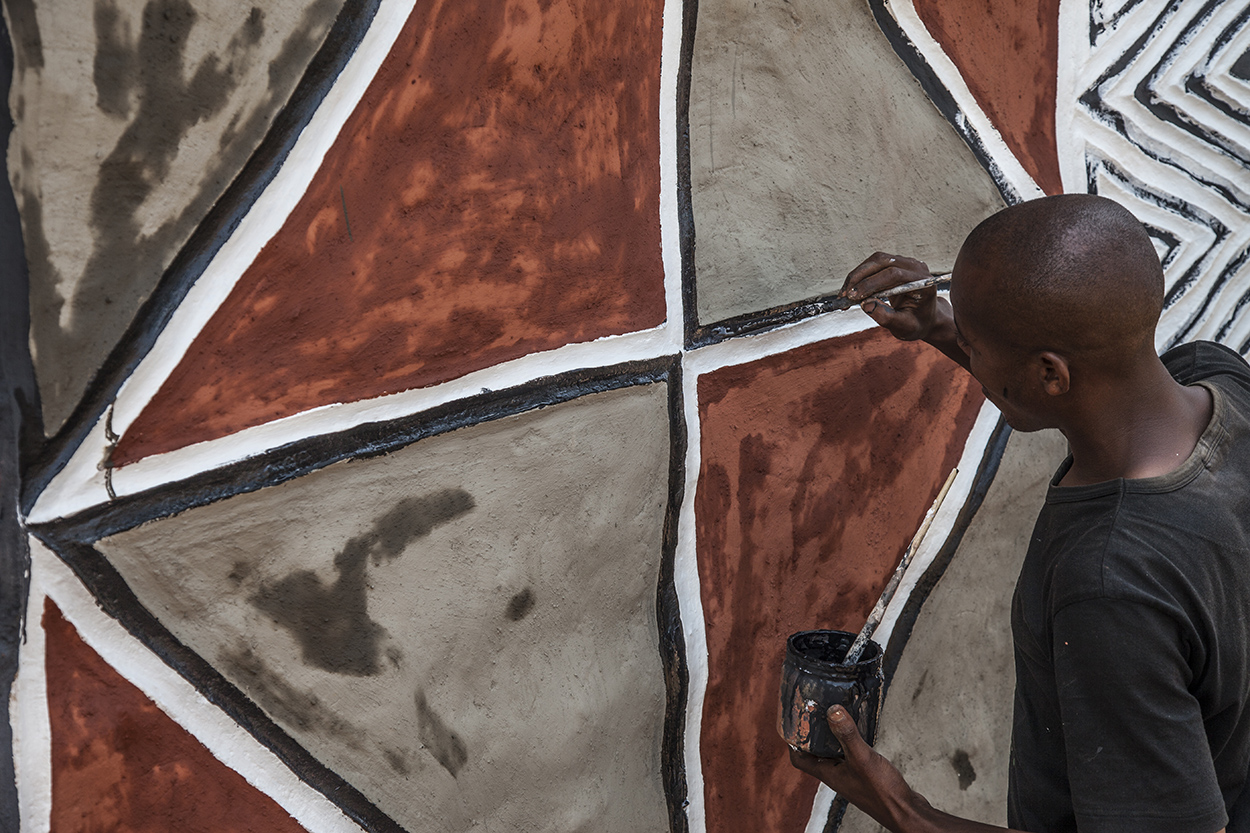
The Imigongo mural-making technique originated in what is now Rwanda’s Eastern province. In the early 19th century, King Karira decorated his palace using the dung of young calves mixed with ash to create relief on the wall’s surface, which was later painted with mud, lime and burnt aloe vera. This technique almost disappeared after the Rwandan genocide.
In the Congolese refugee camps in Rwanda, many families use mud and natural pigments, both materials used in imaging, to decorate their homes, replicating the traditional geometric designs. These refugees are mostly Banyarwanda who emigrated to Eastern DR Congo in the late 19th century, speak Kinyarwanda and share several common traditions and culture.
With the imigongo murals the research team intended to make more child-friendly certain areas identified by the refugee parents and children. The selection process for the murals was a collaborative effort between the refugee participants, architecture fellows, and NGO workers. The team decided that the murals should raise awareness and trigger the development of more Child-Friendly Spaces (CFS) around the camp. Two locations were chosen for the imigongo murals: the maternelle in quarter four and a space close to the market located in quarter two.
For the first set of murals, the children, caregivers, parents, and artisans chose the themes, different designs, and their organization on the walls. On the second site, the neighbors selected the designs that would go on their homes’ walls from a set of traditional imigongo designs. Once the murals had been completed, the caregivers at the Maternelle planted flowers around the murals. Some of the neighbors around the second site also used some of the remaining materials and sought help from imigongo artisans to paint the interiors of their homes.
The design and production of the murals involved active and creative activities with parents, community mobilizers, caregivers, and children. From these conversations, there was an understanding of how participants thought arts and crafts could be used as a tool to create child-friendly spaces.
 CREATIVE ASSEMBLAGES