
ENG | ESP
HEALTH CENTRE
Two courtyards, locally available materials and vegetation create a sustainable and wellness-focused primary healthcare centre.



Project Type //
Public, Health, New-Built, Competition – Third Prize
Chronology//
2024
Location //
Torredembarra, Spain
Team//
Nerea Amoros Elorduy
Anna Adserà Quesada – P+A Arquitectes
Elisabet Pratt – P+A Arquitectes
Client//
Generalitat de Catalunya
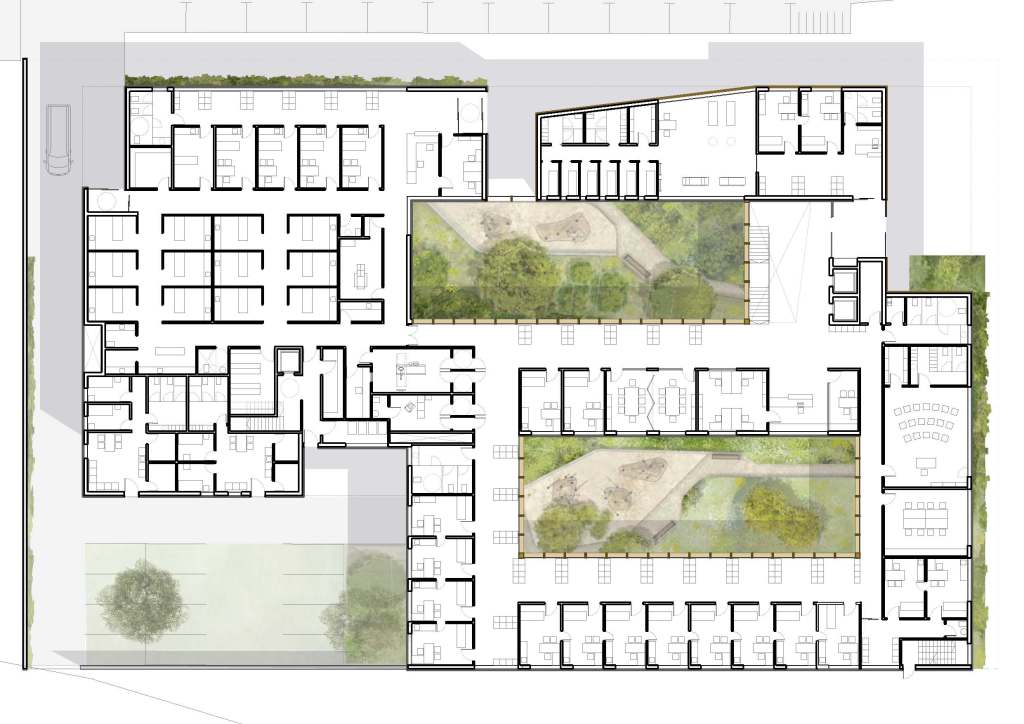
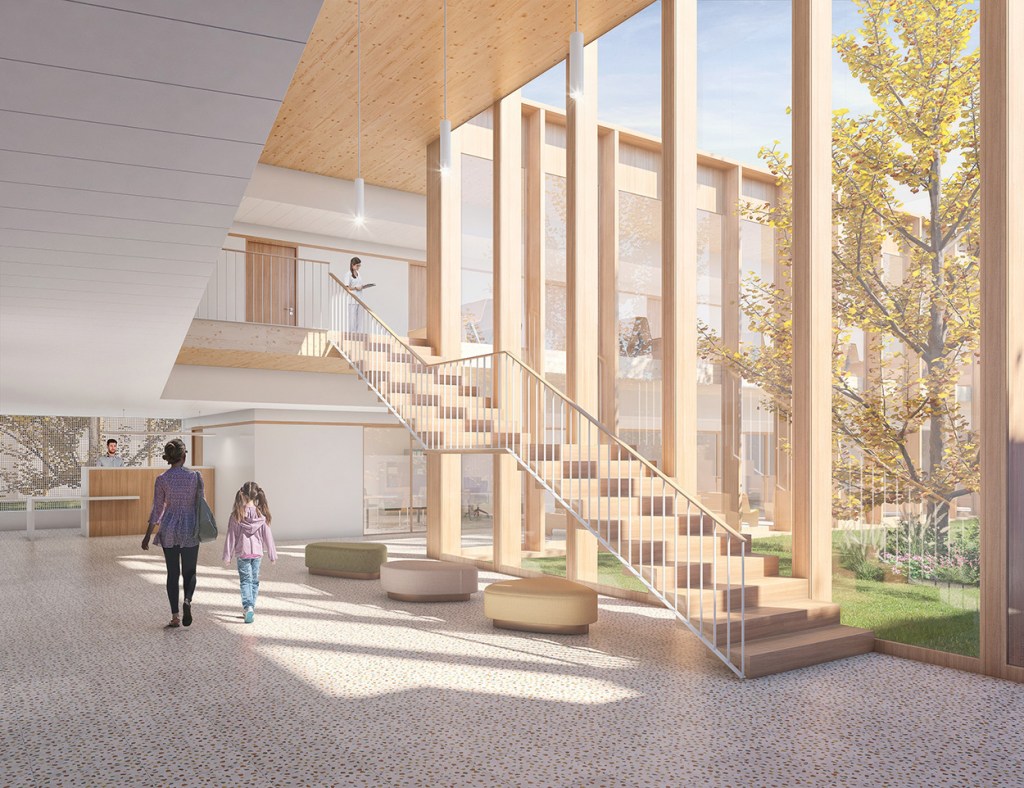
The primary healthcare centre is organised on two floors around two large courtyards filled with vegetation and elements for play and exercise. The courtyards allow natural light and air to reach all areas accessible to outpatients while providing views of their vegetation and activities as well as to the outside from all spaces. The staff, service and emergency areas are designed to be compact while still having access to cross and natural ventilation when necessary. A spacious double-height entrance hall connects both courtyards with the outdoors. It facilitates access to the functional layout and interior circuits, allowing easy access to different areas spread across the ground and first floors.
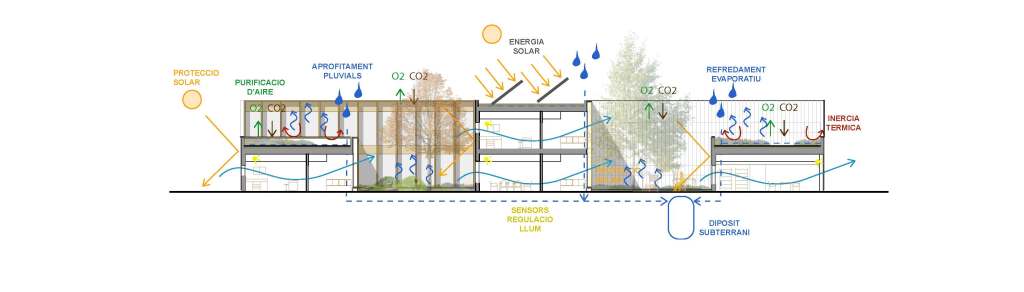
Sustainability and human well-being have guided the overall organisation and also the choice of materials in this health centre. The primary structure and enclosures are constructed using wood, with CLT (cross-laminated timber) employed as a lightweight, industrialised system to decrease construction time and waste. The building’s exterior consists of a folded sheet metal covering separated from the supporting wall, enabling air circulation. This reusable ventilated facade protects from solar radiation and offers thermal and acoustic insulation.
The main entrance porch is adorned with a panel of wooden slats, providing a striking contrast and an elegant appearance. Large wooden modules support the windows of the waiting rooms, establishing a visual connection with the courtyards and the outdoors. Garden roofs using featuring Indigenous species that require minimal water and are resilient to sunlight at the first-floor level promote biodiversity and air quality, while the topmost roofs accommodate all the solar panels.
The building has facilities such as photovoltaic modules for self-consumption, highly efficient air conditioning and lighting systems, and instantaneous water heating close to consumption points, all intended to contribute to sustainability and cost savings actively. In addition, the building is designed to minimise its environmental impact by utilising durable and low-maintenance materials, industrialised components, recycled materials, and passive systems, ultimately achieving a low energy demand and approaching self-sufficiency.
 CREATIVE ASSEMBLAGES