
ENG | ESP
HOPE DENTAL CLINIC
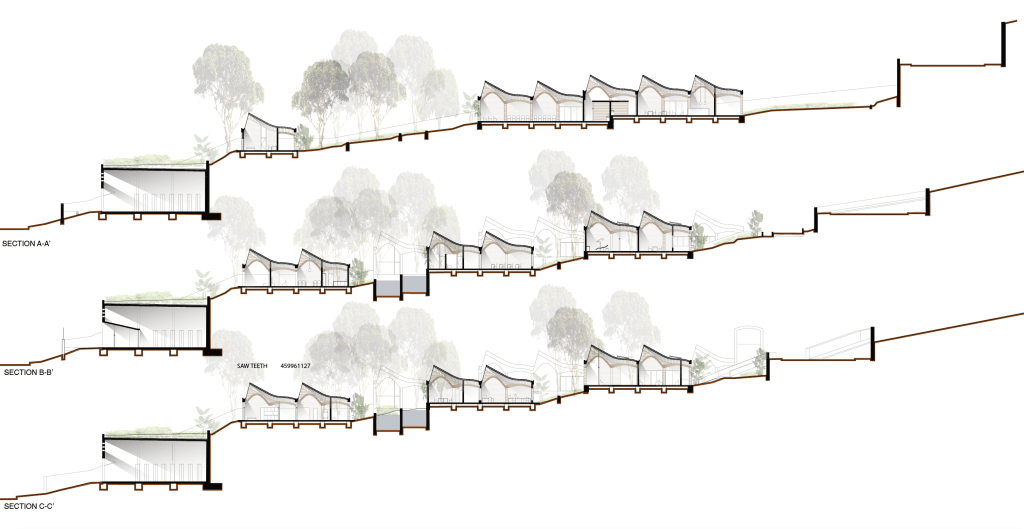
With sustainability and a human-centred design at its core the clinic’s modularity allows for an efficient construction process and effective use of the steep plot while giving flexibility to the program and the possibility of evolution over time.




Project Type //
Health facility, Competition
Chronology//
2020
Location //
Kigali, Rwanda
Team//
Nerea Amoros Elorduy
Anna Adserà Quesada - P+A Arquitectes
Elizabet Prat – P+A Arquitectes
Jonathan Kateega
The aim of this project is to utilize high-quality fired clay products that are locally available while reducing the use of concrete and earthworks. The construction system and materials have been carefully selected to take advantage of the site’s moderate climate and slope.
The proposed construction technique involves using centuries-old vaulting techniques with fired clay components for the roofs and compressed earth blocks for the vertical structural elements. This approach reduces the use of steel and cement, which are often imported into the country and contribute more carbon to the environment. The flooring will be done with self-leveling epoxy, which is easily found in Rwanda and is easy to clean, a key factor in a health facility. Glazing and solar protection devices will be made from glass, steel, and local hardwood.
The construction method aims to enhance local capacity both for laborers and the local economy by introducing some level of innovation to an already familiar material. Despite its complex appearance, this type of vault requires very little high-tech and instead relies on good, quality labor.
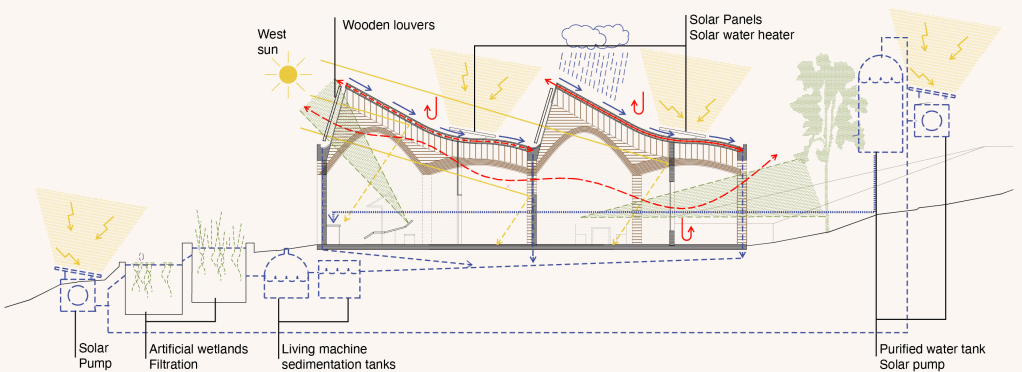
The vaults are organized in a serrated teeth system that is oriented northwest to get indirect natural light and ventilation to the clinic’s spaces and the attached housing. The walls and vault provide thermal and noise control, which ensures internal comfort for both patients and staff. The vault has a double layer of ceramic and an in-between air chamber to optimize thermal control. Multiple patios filled with pre-existing eucalyptus and indigenous plants of Rwanda and the Great Lakes region can be found on the patios and the warehouse’s green roof.
For the functioning of the clinic’s water purification, a dual system combining living machine-type tanks with artificial wetlands that use floating and submerged indigenous aquatic plants is proposed. The electrical systems and hot water will be powered by solar panels and solar water heaters installed over the roofs of the first modules.
 CREATIVE ASSEMBLAGES