ENG | ESP
PARTICIPATORY RESEARCH TOOLS
Research — Design
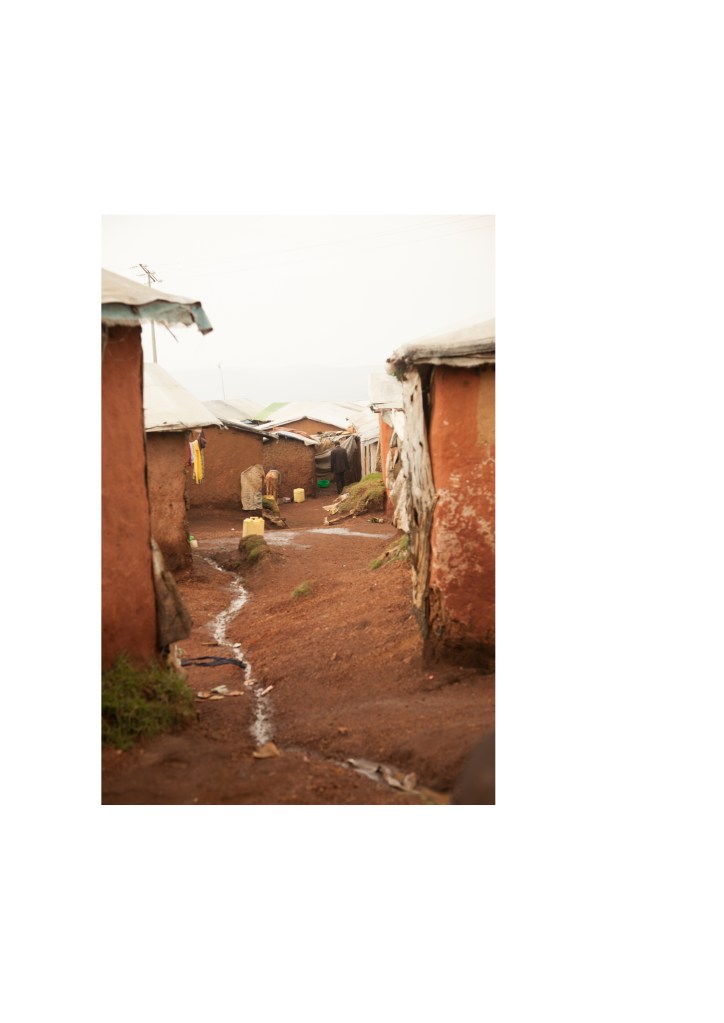
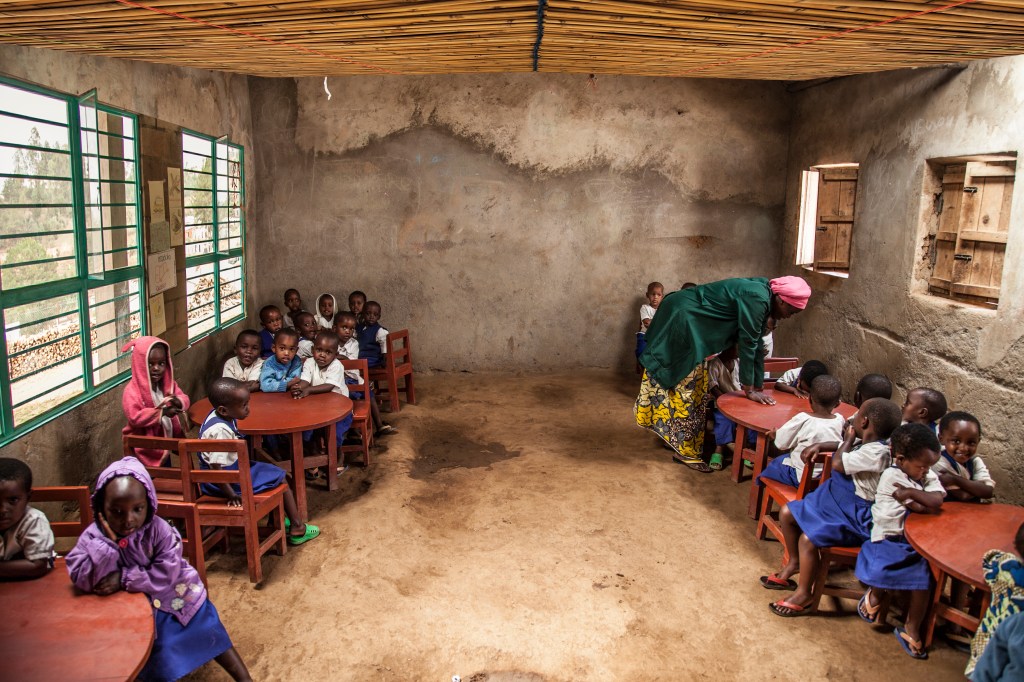
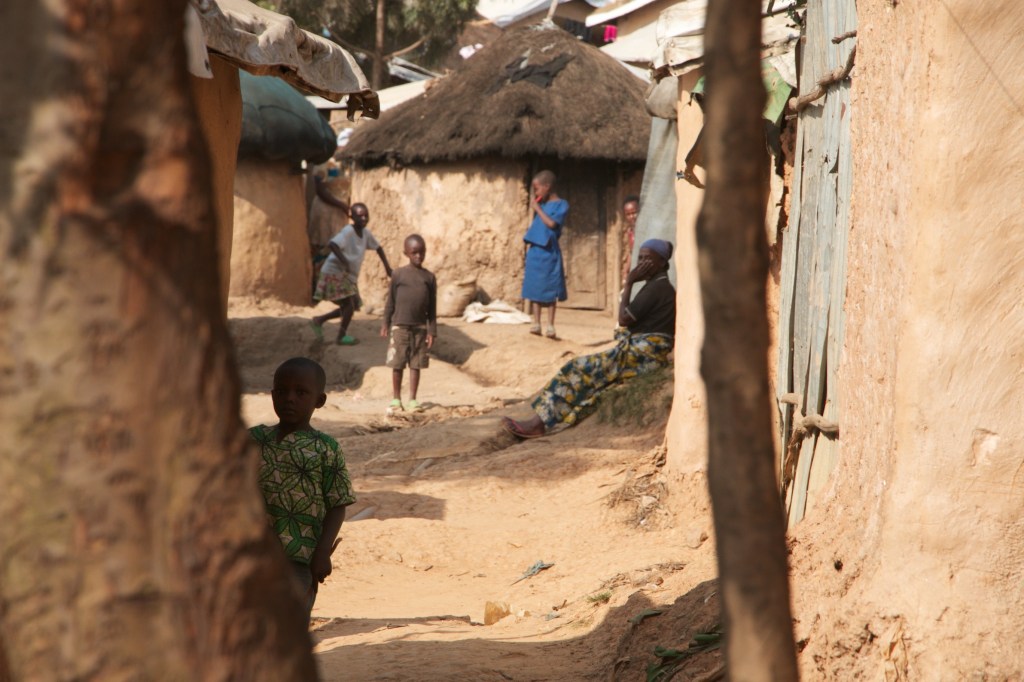
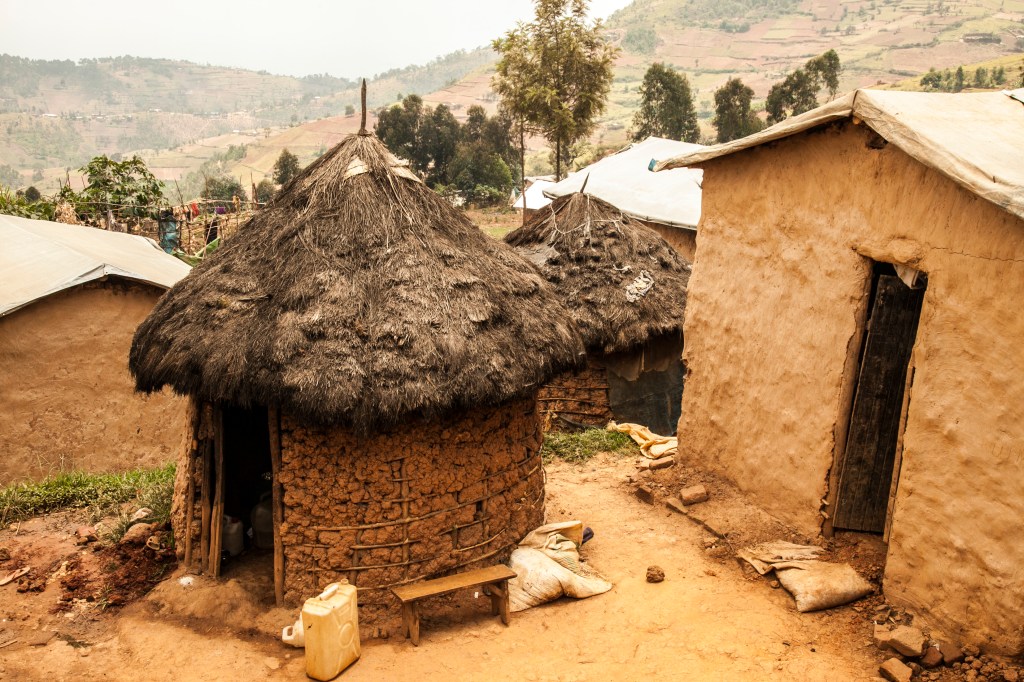
Architecture and its instruments – in this case, a physical model and photomontages- serve as interactive, translating, and inclusive tools for facilitating conversations, exchanging opinions and views, and gathering information about how the built environment of a refugee camp influences young children daily.






Project Type //
Research Findings Dissemination and impact phases
Chronology//
2017-2020
Location //
Model making – London, United Kingdom
Participatory process – Kiziba refugee camp, Rwanda
Team//
3D Modelling – Lloyd V. Price
Printing – Bartlett Bmade
Development of Kiziba’s plan, workshop organiser – Nerea Amoros Elorduy
Participatory workshop coordination – Victor Iyikaryemye, Moses Mawa and Lydia Kanakulya
Photography and video – Joan Amoros Elorduy
Funding//
Beacon Bursary UCL – UCL Culture
Fundación La Caixa
Participants//
ECD caregivers, parents, children and youth from Kiziba refugee camp
MINEMA (former MIDIMAR)
GHH
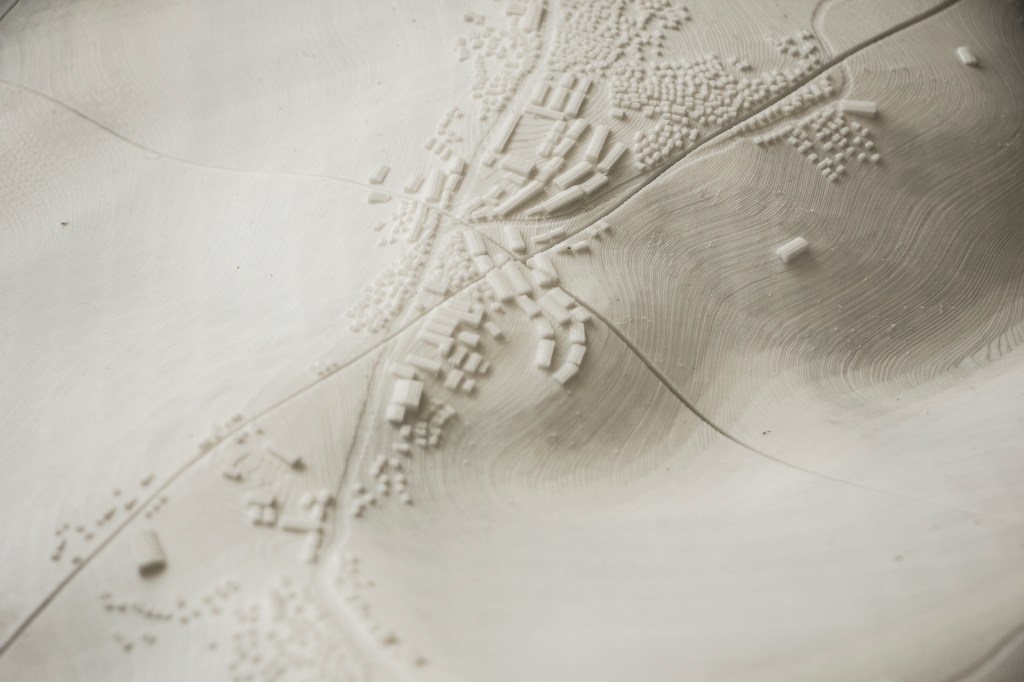
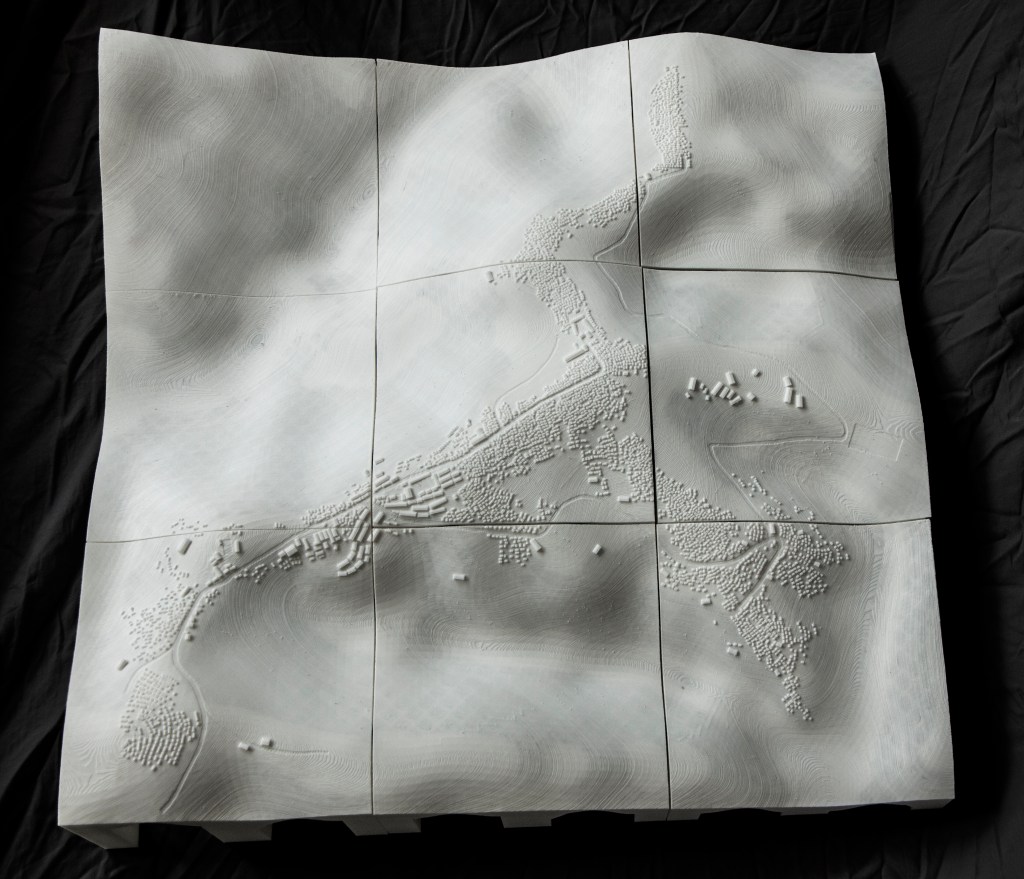
The 3D printed model of the Kiziba refugee camp and the photomontages using existing spaces and refugee ideas for changing those were aimed at facilitating discussion and engaging diverse stakeholders in conversations relating to the built environment of the refugee camp since most of the camp population could not read 2D maps.
To build the 3D-printed model, a 2D map of Kiziba was developed, tracing the satellite imagery with AutoCAD and GIS. Later, the AutoCAD file was translated to the Maya software, and a relatively accurate height map of the area (gathered from open sources) was converted into a 3D virtual file to be printed with a hot-filament printer. After three trials, we developed the best position and support for an efficient print. The hot-filament printer was chosen due to its reduced cost and the durability and sturdiness of the finished pieces. The colour chosen was white, initially intending to project the camps’ satellite imagery onto it and also to be able to place markers on it more easily.
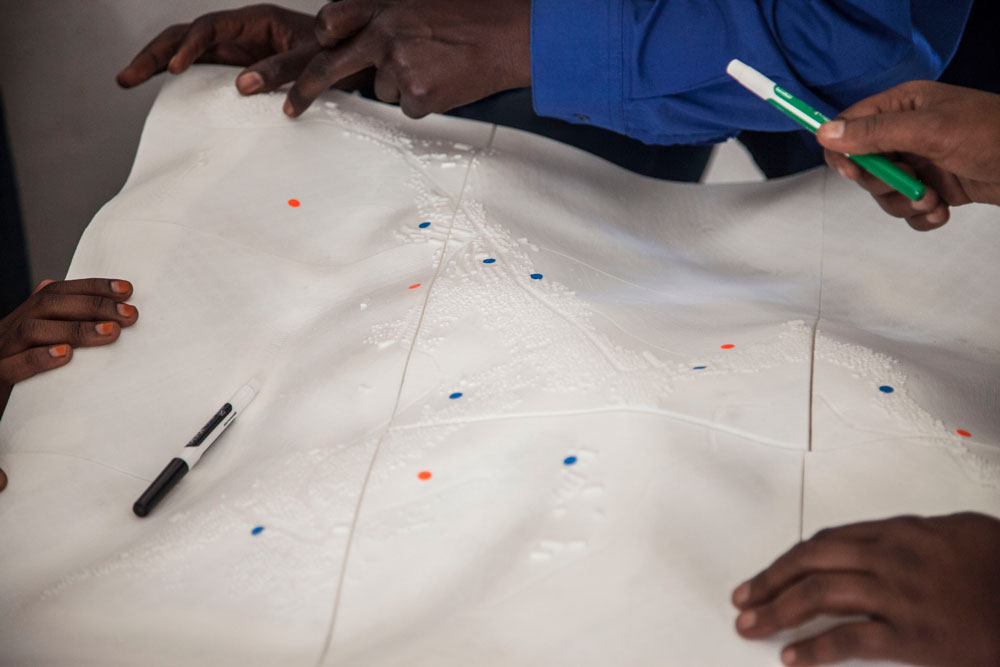
We took the 3D-printed model of Kiziba to the camp for a day workshop to identify sites where children play for potential further intervention. Even the young workshop participants – between three and five years old – could locate their homes and their go-to play areas on it. The model seemed to allow an intergenerational and interdisciplinary discussion where all the actors present could have their say.
To reflect and explore the viability of the refugees’ ideas to improve the camps spaces and make them more child friendly, we decided to use before and after photomontages. Drawing from the most salient answers from a household and a day care questionnaire we built various before and after photomontages featuring key spaces of kiziba refugee camp. Homes with murals, paths with pavements and stormwater management, classrooms with windows and ceilings and so on.
 CREATIVE ASSEMBLAGES